Home
JAQForum Ver 24.01
Log In or Join  
Active Topics
Local Time 06:44 06 Jun 2026 Privacy Policy
Jump to

Notice. New forum software under development. It's going to miss a few functions and look a bit ugly for a while, but I'm working on it full time now as the old forum was too unstable. Couple days, all good. If you notice any issues, please contact me.

Forum Index : Electronics : Wiseguy (WG) Inverter Build Discussions Australia

     Page 3 of 3    
Author Message
phil99

Guru

Joined: 11/02/2018
Location: Australia
Posts: 3268
Posted: 09:50pm 17 May 2026
Copy link to clipboard 
Print this post

  Quote   to measure inductance per turn.  Just wrap 10 turns on the core then measure the inductance then divide by 10

Divide by 100.
Inductance is proportional to N^2
 
analog8484
Senior Member

Joined: 11/11/2021
Location: United States
Posts: 201
Posted: 10:49pm 17 May 2026
Copy link to clipboard 
Print this post

  phil99 said  
  Quote   to measure inductance per turn.  Just wrap 10 turns on the core then measure the inductance then divide by 10

Divide by 100.
Inductance is proportional to N^2


Yes, the inductance is proportional to N^2 and divide by 100 if you want to get the inductance factor (Al).  But for layman doing quick checks against other builds to verify core type it's fine to just check inductance per turn (divide by 10) or not divide at all IMHO.
 
GleamBright
Newbie

Joined: 21/04/2025
Location: Australia
Posts: 32
Posted: 12:33am 18 May 2026
Copy link to clipboard 
Print this post

Thats sensible Analog8484, relative to where I and others are at with our capabilities and extent of project development.
 
wiseguy

Guru

Joined: 21/06/2018
Location: Australia
Posts: 1292
Posted: 01:13am 18 May 2026
Copy link to clipboard 
Print this post

I think it best so show what the issue is with a real world example, so no one goes off on the wrong tangent.

L = Nsquared x AL

L = final inductance, N = number of turns, Al = inductance factor

Assume N = 1 & Al = 1mH, therefore L = 1 x 1 x 1 or 1 Turn = 1mH

Assume now N = 10, now L = 10 x 10 x 1 so L = 100mH for 10 turns

Now divide the resulting 10 turn L = 100mH by 10 for 1 turn and we get 10mH ie Al now =10?

But Al = 1mH and it is a constant so 10T and divide resultant by 10, then we are out by a factor of 10 in this example - it gets rapidly worse with the number of turns!

Because we are dealing with the number of turns squared, the rise in L is not a straight line but exponential. The inductance factor Al is not directly proportional to the number of turns, but it is related to a single turn and the square root of the number of turns.

Direct quotes below.
Wikipedia: The inductance is proportional to the square of the number of turns in the coil
Google AI: Therefore, doubling the number of turns in a coil doubles the inductance, and quadrupling the number of turns quadruples the inductance.

Love AI - the world is slowly going to hell in a hand basket...... I actually don't remember AI ever giving me a correct answer and when challenged the reply is "sorry for your confusion, what you say is correct" - my confusion? go figure
Edited 2026-05-18 11:33 by wiseguy
If at first you dont succeed, I suggest you avoid sky diving....
Cheers Mike
 
GleamBright
Newbie

Joined: 21/04/2025
Location: Australia
Posts: 32
Posted: 12:59am 26 May 2026
Copy link to clipboard 
Print this post

Jake, great work as reported on the 'Inverter Building...' thread. Must be satisfying to see it working. How long did it take to put it all together?

Can I get clarification again on a couple of points?

Have I correctly understood that capacitor specification 1n5 is 1.5 nanoFarads/ 0.0015 µF, whereas 1u5 is 1.5 microFarads/1.5 µF?

May we have voltage specs for capacitors as follows:
- Power Board WG30 items C1-C6,9,11 1u capacitor
- WG30 items C7,8 1n5 capacitor
- LCD Board WG44 item C1 100n capacitor

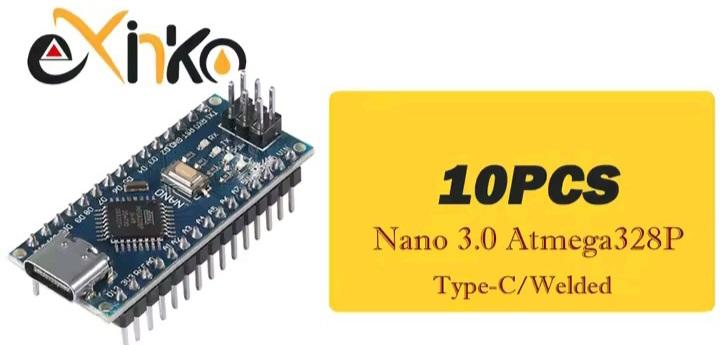
Are there any generally recommended sources for the nano chip, taking into account KeepISs' comments about looking for good vs bad chips and recommended cap & diode removals?

Cap Board WG06 capacitors, again taking into account KeepISs' comments. What capacity and quantity is now recommended? 4,700 vs 10,000 uF, or something else? Does it matter?

Control Board WG39 items J8 - J11 **(J10). The comment says ** DNL J10 (No Sync code yet). Can we get more detail about what, exactly, to order here for items J8,9 & 11, and for J10?
 
GleamBright
Newbie

Joined: 21/04/2025
Location: Australia
Posts: 32
Posted: 01:37am 26 May 2026
Copy link to clipboard 
Print this post

Does the tolerance and/or the composition (thin film/ metal/ foil/ etc) specification matter for the resistors? I assume not, & if so, what are sensible specs? There's a dizzying array of options! Also for capacitors, especially smaller ones.
Edited 2026-05-26 12:02 by GleamBright
 
KeepIS

Guru

Joined: 13/10/2014
Location: Australia
Posts: 2157
Posted: 02:03am 26 May 2026
Copy link to clipboard 
Print this post

Yes you understood it.

Up to my armpits dismantling the old LiFePO4 battery racks and rebuilding them in battery boxes, it's hard to get 115kg cabinets from the bench to the ground , one down 3 to go. So a few quick answers.

IMHO 4700uf Caps are best, 4 mounted on each board (full board). This allows better cooling across 4 caps on each board. Using 10000uF limits you to a max of 3 on each board, and really, 3 per board is almost to much destructive power across the Fets.

Around 19000uF on each board for a total of around 38000uF is nice.
   
J10 is simply used as a sync output when testing with a DSO, makes nice synced locked stable waveforms.

Caps C7,8 are 1n5 Film or Monolithic rated 63v or 100V

The others are the same type and 63v, as 100V start getting a bit big, but I've fitted 100V in a pinch.

LCD board are just 100nF 50v to 63v.

Ill get some links to the boards, unless someone posts some before I get a chance.    

Hope I covered it all.
NANO:Inverter V 8.2ksLinux AvrDude GUI script V4.1
 
KeepIS

Guru

Joined: 13/10/2014
Location: Australia
Posts: 2157
Posted: 02:05am 26 May 2026
Copy link to clipboard 
Print this post

Resistors, metal film 1% as there is not much difference in cost, 1/2 watt unless specified as other.

Capacitor types matter, follow specified types in BOM.

Edit resistor type.
.
Edited 2026-05-26 13:09 by KeepIS
NANO:Inverter V 8.2ksLinux AvrDude GUI script V4.1
 
jakesea
Newbie

Joined: 30/09/2023
Location: United Kingdom
Posts: 25
Posted: 10:41am 26 May 2026
Copy link to clipboard 
Print this post

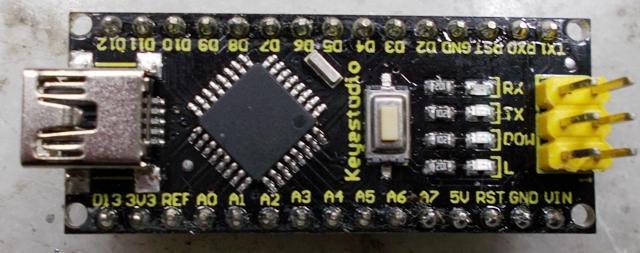
I followed KeepIS advice and bought Keyestudio on Ali.
 
KeepIS

Guru

Joined: 13/10/2014
Location: Australia
Posts: 2157
Posted: 12:43am 27 May 2026
Copy link to clipboard 
Print this post

  jakesea said  I followed KeepIS advice and bought Keyestudio on Ali.


Thanks, you saved me the time looking it up, I've bought quite a few of those, everyone has programmed and run perfectly, and very nice board and build quality.
NANO:Inverter V 8.2ksLinux AvrDude GUI script V4.1
 
GleamBright
Newbie

Joined: 21/04/2025
Location: Australia
Posts: 32
Posted: 04:30am 27 May 2026
Copy link to clipboard 
Print this post

Thanks Jake, can't complain about the price and will take on board feedback from our in house IT expert.

A couple more questions:

Can you describe the monolithic capacitor type listed on the BOM in more detail, as I know this is not a surface mounted MLCC. There's no category for 'monolithic' on Digikey, where I'm compiling the first pass shopping cart.

Re: resistor pitch specifications, 10mm for example. Is this equivalent to the hole spacing? as most of the catalogued axial resistors have lengths 6mm or less. I'm assuming 6mm will be ok as the leads will be bent to match the hole spacing?

Where the capacitor footprint is listed as 2.54mm (0.2"), does this mean that the lead spacing should be 2.54 mm, but 0.2 inch - which is 5mm is also tolerable?
 
KeepIS

Guru

Joined: 13/10/2014
Location: Australia
Posts: 2157
Posted: 05:15am 27 May 2026
Copy link to clipboard 
Print this post

Monolithic capacitor are Multi-layer ceramic capacitor, abbreviated as MLCC.

I normally use them as bypass caps, like 100n (0.1uF), very small, bend leads to fit.  

MKT miniature polyester, normally 100V rated should be fine for the rest, except for, Electrolytic, Tantalum, and a few a Ceramic caps like C3, C14, C23, these should be easy to find.

1/2 watt metal film is the same size as normal 1/4 watt, yes leads are bent to fit the mounting holes, sometimes they are mounted vertically to save space, one way or the other, they will fit. Don;t sweat the resistors, a Resistor that dissipates more power than a standard 1/4 /1/2 watt resistor, is normally listed with the power level it  requires.

Other members might like to correct any of the above, I'm just generalising here.
.
NANO:Inverter V 8.2ksLinux AvrDude GUI script V4.1
 
GleamBright
Newbie

Joined: 21/04/2025
Location: Australia
Posts: 32
Posted: 05:47am 27 May 2026
Copy link to clipboard 
Print this post

R39-R42 on Control Board WG39.... no resistance value specified. What should it be?
 
KeepIS

Guru

Joined: 13/10/2014
Location: Australia
Posts: 2157
Posted: 08:12am 27 May 2026
Copy link to clipboard 
Print this post

R39-R42 are not needed as you will be using U8 and U9, which are high current Drivers for the Power board Optos, and U6 should be a SN74AC86N.

From memory there are no markings on the later controller PCB for those resistors..
Edited 2026-05-27 18:17 by KeepIS
NANO:Inverter V 8.2ksLinux AvrDude GUI script V4.1
 
     Page 3 of 3    
Print this page


To reply to this topic, you need to log in.

The Back Shed's forum code is written, and hosted, in Australia.
© JAQ Software 2026